

Grapevine, TX 76051
(817) 481-1041
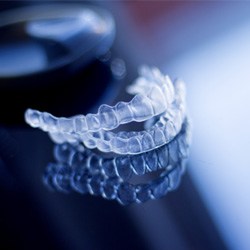 For teens and adults who would like to fix their crooked teeth without wearing metal braces for two or more years, there is an excellent orthodontic alternative with Invisalign in Grapevine, TX. This clear braces option has already helped over 4 million people worldwide enjoy healthier, more attractive smiles. Will you or your teen be the next to enjoy all the benefits of Invisalign?
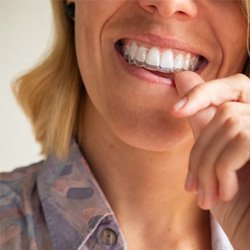 For teens and adults who would like to fix their crooked teeth without wearing metal braces for two or more years, there is an excellent orthodontic alternative with Invisalign in Grapevine, TX. This clear braces option has already helped over 4 million people worldwide enjoy healthier, more attractive smiles. Will you or your teen be the next to enjoy all the benefits of Invisalign?
Invisalign straightens teeth using the same orthodontic principles as traditional braces, which means it gradually moves the teeth by placing focused pressure on different areas of the bite throughout treatment. But unlike metal braces, Invisalign works using a series of clear, plastic trays that you can remove to eat and clean.
The Invisalign aligners are created from digital scans taken of your teeth in the treatment planning phase. Once your aligners are ready, you will wear each one for two weeks before advancing to the next in the series. The trays are designed to fit your dentition as it gradually shifts throughout the treatment.
After you complete the Invisalign treatment, you will be fitted for a retainer. Most people need to wear it the majority of the day at first, and then only at night after a few months to keep their teeth in the proper position for a lifetime to come.

Some dentists only offer Invisalign as an alternative solution to adults. The reason is that this type of treatment does require more responsibility on the part of the patient. However, older, more mature teenagers can also benefit from Invisalign. If your teenager is in need of orthodontic treatment and you think Invisalign could help them achieve a healthier smile, call us today to schedule a consultation to learn more about Invisalign Teen!

Invisalign Teen works much the same way as a normal Invisalign treatment. However, the aligners that your teenager receives will have a small dot on the back. This dot will change color over time based on how often your teen is wearing their aligners; this helps ensure that they are sticking to the treatment plan. Additionally, teenagers are generally given more replacement aligners than adults.

Since Invisalign is more discreet than traditional braces, it can be a great option for teenagers who require orthodontic treatment and are self-conscious about their appearance. It should be noted that Invisalign tends to work best when it comes to making mild to moderate orthodontic corrections; more complex cases generally call for traditional braces.

There are many reasons why Invisalign can be a great fit for the active lifestyle of your teenager. For one thing, there are no brackets or wires that could accidentally be damaged if the patient gets hit in the face while playing sports. Your teen will also likely find it easier to play an instrument without any braces to get in the way. Finally, since Invisalign is removable, your teenager will have the freedom to enjoy all of their favorite foods throughout the treatment.

Invisalign can be a good choice for a variety of patients. That’s one of the reasons it continues to be so popular! With that said, our team will need to examine your smile to make sure that you’re a candidate for this orthodontic treatment. In the meantime, you can read on to learn more about who clear aligners can help.
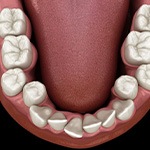
Teeth that are too closely crowded together can draw the wrong sort of attention. Not only that, but you’re likely to find that it’s difficult to clean them as thoroughly as you need to. If this sounds all too familiar, then you’ll be happy to hear that you may be a candidate for Invisalign! If we determine that’s the case during your consultation, then we can straighten your teeth with clear aligners.
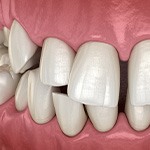
While some patients are struggling with overcrowding, others are struggling because their teeth are spaced just a little too far apart. Unfortunately, this can lead to several issues, including low self-esteem and an increased risk of gum disease. Don’t get discouraged, though. After all, Invisalign is usually an option for patients with mild to moderate spacing issues.
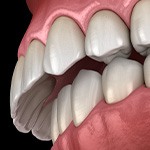
If you’re having trouble smiling confidently or enunciating clearly because your upper teeth jut out, then you might be wondering right about now if Invisalign can fix overbites. The short answer is “yes.” So, don’t hesitate to schedule a consultation with our cosmetic dentist in Grapevine. That way, he can assess the severity of your misalignment and determine if you’re a good candidate for Invisalign.
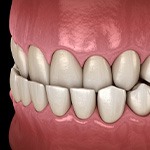
Underbites are a common bite problem that, if left alone, could ultimately have serious consequences for your teeth. That’s why we advise against taking the “wait and see” approach! Instead, we recommend scheduling a consultation with Dr. Gregory D. Martin so he can review your dental history, complete a comprehensive oral exam, and determine if Invisalign is right for you.
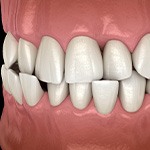
Do only a few of your upper teeth sit behind your lower ones? If that’s the case, then you may have a crossbite, which is a bite problem that can lead to everything from trouble chewing properly to premature wear on your teeth. Depending on the severity of your particular bite problem, Invisalign may be a viable solution. So, don’t just assume that traditional braces are your only option!
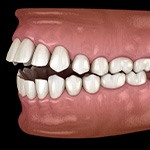
If there is a space between your upper and lower teeth when you bite down, then you might have an open bite. In the past, treatment required metal brackets and wires. Thankfully, however, Invisalign can fix mild to moderate cases today. To find out if you’re a good candidate for clear aligners, call our team at Smiles by Martin so we can get a consultation on the calendar.
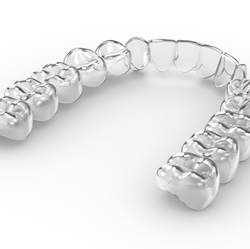
Invisalign offers a number of benefits compared to traditional braces. That’s why millions of patients have chosen to straighten their teeth with clear aligners over the last 20+ years! If you are interested in learning some of the advantages that come with this innovative orthodontic treatment, keep reading.
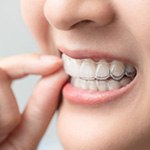
Although traditional braces are certainly effective, they leave much to be desired when it comes to aesthetics. Fortunately, Invisalign can correct overcrowding, overbites, and other common orthodontic problems without the metal. As a result, your braces won’t be the first thing others notice. Plus, since they are removable, you can take them out for important events, like taking engagement photos or giving a presentation at work.

In addition to being more discreet, metal-free braces are more comfortable. In fact, many patients make it through the entire teeth-straightening process without soft tissue irritation and blisters! Plus, if one of your aligners does have a rough edge, you can cover it with dental wax to protect your tongue, your gums, and the insides of your cheeks.

Another benefit of Invisalign: you can eat all your favorite foods without fear of breaking a bracket or popping off a wire. Just make sure that you remove your aligners before any meals or snacks. This is important because, if you keep them on, the plastic can warp, stain, and crack, negatively impacting their appearance and effectiveness in the process.

Since the brackets and wires are bonded in place, it can be tricky to brush and floss with traditional braces. With Invisalign, it’s much simpler because the aligners are removable. So, once you’ve taken them off and placed them in their designated case, you can proceed with your usual oral hygiene regimen. Just make sure to clean your aligners before putting them back on!

Invisalign is revolutionary for several reasons, including that it allows you to progress through portions of your treatment plan at home. This, in turn, leads to less time in the treatment chair. In fact, most patients only need to come to our office every 6-8 weeks. Plus, the visits can be 30 minutes or less if you’re on track with your treatment plan.
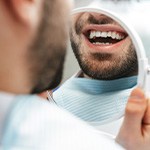
Typically, patients with traditional braces achieve the desired results in 2-3 years. Invisalign, on the other hand, has an average treatment timeline of only 12-18 months. During your consultation, we can provide you with a more precise estimate and share how you can avoid treatment plan delays, like wearing your aligners for a minimum of 20 hours each day.

Over the last 20+ years, Invisalign has helped millions of patients around the world achieve straighter, healthier smiles. So, there’s a good chance that you already know quite a bit about it! But do you know what will stay the same and what will change in your day-to-day life? If not, that’s okay – this section covers some helpful information on the topic.
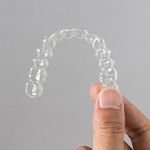
Although each treatment plan is unique, there are some aspects of Invisalign that are universal, starting with the daily wear time requirement. In order to stay on track with your treatment plan, you need to keep your aligners on for the vast majority of the day (20-22 hours). The easiest way to make this goal a reality is by only taking them off when it’s absolutely necessary, like before brushing your teeth in the morning.
Tip: Not sure if you’re wearing your trays for the recommended amount of time? Use the stopwatch on your phone as a guide!
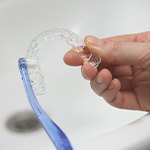
Good news: you don’t need to purchase expensive cleaning products or adopt a cumbersome oral hygiene regimen. In fact, you probably already have everything you need (clean water, a soft-bristled toothbrush, mild dishwashing soap), and the entire process only takes a few minutes.
Important reminder: You should NOT use toothpaste, mouthwash, or bleach to clean your aligners. If they start to stain or smell, then use the cleaning crystals that came in your welcome kit!

Since clear aligners are removable, Invisalign doesn’t come with a long list of dietary restrictions. In fact, there’s really only one rule you need to follow when it comes to eating and drinking: you need to remove your trays first (with the exception of water). Not only will this prevent the plastic from staining, but it will also prevent it from warping, which could have a negative impact on the teeth-straightening process.

Speaking of having a negative impact on the teeth-straightening process… Losing or damaging one of your trays can cause you to fall off-track with your treatment plan. That’s why we recommend adopting habits like placing them in their designated case anytime you aren’t wearing them. If you accidentally throw them away or break them, then don’t wait – reach out to our team at Smiles by Martin right away.

Finally, you need to come to our office periodically throughout your Invisalign treatment (usually every 6-8 weeks). That way, Dr. Martin can monitor the movement of your teeth. If they are progressing as anticipated, then he will provide you with the next batch of aligners in the series. If your teeth aren’t moving as planned, however, then he will need to determine what adjustments need to be made to get you back on-track with your treatment plan.

How much will Invisalign cost in your case? The answer depends on the details of your unique treatment plan. Because the overall price can vary, the only way to get a firm idea of what the cost will look like is to schedule a consultation with our team so that we can examine your smile. Not only can we explain the factors that will influence the final price, but we can help you figure out the best way to make the treatment affordable.

The cost of Invisalign is dependent on a number of factors. Some of the variables that impact the cost of Invisalign include:
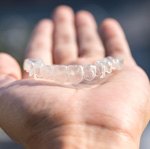
Mail-in aligners do tend to have a lower cost than Invisalign. However, a lower cost doesn’t automatically equal a better treatment. With Invisalign, you can enjoy the benefit of having a trained dental expert overseeing the entire process, meaning they can make sure that everything is going according to plan. In contrast, the lack of direct professional oversight with mail-in aligners makes it less likely that problems will be caught in a timely manner.

Until relatively recently, all orthodontic treatment was considered entirely cosmetic and did not receive any coverage from dental insurance providers. When dental insurance providers did decide to begin covering orthodontics, only traditional bracket and wire braces were covered. Today, most dental insurance plans will cover the cost of part of your orthodontic treatments using either traditional braces or clear braces. If your provider offers coverage for Invisalign, we will help you maximize these benefits.

In addition to accepting dental insurance, we can make paying for Invisalign (and various other treatments) less of a strain on your budget thanks to financing via CareCredit and Citi Health. You can choose a financing plan that breaks up the cost of your care into easier-to-manage installments; oftentimes, there will be little to no interest for you to worry about. Reach out to us today if you would like to explore your financing options.
Unlike traditional braces that use wires to place pressure on brackets shifting teeth, Invisalign uses a series of clear plastic alignment trays to gently move teeth into their ideal alignment over the course of about 12 months of treatment. Each set of aligners will represent your smile one step closer to the ideal alignment. You’ll wear the alignment trays for about two weeks at a time, after which you’ll need to exchange them for the next set in the series. Every six to eight weeks, you’ll visit us for checkups to ensure your smile is shifting according to plan.
Any time your body undergoes extensive procedures like orthodontics, there will be some discomfort. It’s only natural. However, unlike bracket and wire braces that irritate the soft tissue in addition to the mild discomfort that is typical with any advanced treatment plan, the smooth, plastic Invisalign trays reduce sensitivity and discomfort, making Invisalign clear braces a more comfortable treatment plan for many patients.
Invisalign orthodontics are a great option for more patients than ever before thanks to innovations in treatment methods and materials. However, some of the best candidates for Invisalign include:
Every treatment plan will be uniquely catered to individual needs. However, most patients achieve their desired results within eight to eighteen months. In addition to shorter overall treatment times, patients also save time throughout Invisalign with shorter, less frequent checkup appointments.
Yes, you will. Following orthodontic treatment of any kind, you’ll need to wear a retainer. This keeps the newly repositioned teeth firmly in place as the supportive alveolar bone and gum tissue fuse with your root system, keeping your flawlessly aligned smile in place. Luckily, we can often use retainers crafted from a clear plastic that looks very similar to your alignment trays, so even while you’re wearing a retainer, all anyone will see is a beautiful smile.